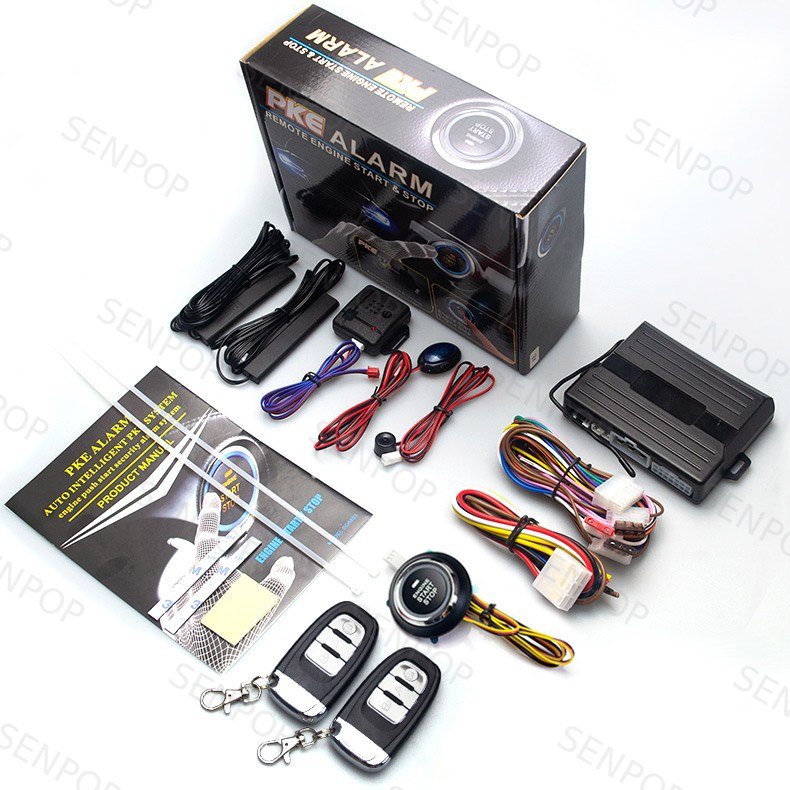
How Does a PKE Keyless Entry System Work?
Passive keyless entry (PKE) feels like magic to end customers — the car unlocks as they approach and locks again as they walk away. For distributors and installers, understanding what actually happens between the remote and the car helps you answer pre-sales questions, train technicians and upsell the right kit.
The Short Answer
A PKE system works by exchanging low-frequency (LF) radio signals between the vehicle and the remote. When the remote enters the detection zone, the system wakes it up, verifies its encrypted ID and triggers the door locks automatically — no button press needed. Push-start versions run the same verification again before allowing the engine to start. In everyday use: approach the car and it unlocks; walk away and it locks.
The Two Distance Zones
PKE detection is built around two zones:
- Outer zone (wake and sense). The control module's LF antenna continuously listens for a paired remote approaching. As soon as the remote is detected, the system prepares to authenticate it.
- Inner zone (authorize and act). Closer to the vehicle — typically around the door handles — the system completes the ID check and fires the unlock pulse to the central locking.
When the driver walks away with the remote, it drops out of the detection zone and the doors re-lock automatically. Exact distances differ between models and depend on antenna placement during installation. Bluetooth PKE models such as the 8803BT support BLE-based auto lock/unlock on top of the traditional remote; for measured distances, ask us for the data sheet of the specific kit before publishing any number on your own product page.
What Happens When the Driver Approaches
- The LF antenna detects the remote. The module senses a paired remote entering the detection zone.
- The remote wakes up and replies. It answers over its RF link with an encrypted, rolling-code response — a new code every time.
- The module verifies the ID. A match unlocks the flow; no match or no reply means the doors stay locked.
- Doors unlock automatically. The module sends an unlock pulse to the central locking — the driver just pulls the handle.
- Walk away, auto re-lock. When the remote leaves the zone, the system locks up and arms again.
The whole sequence takes about a second. For installers, the practical takeaway is that antenna and module placement directly affect detection range and reliability — a badly placed antenna is the most common cause of "it only works sometimes" complaints.
How Push Button Start Is Authorized
In a PKE + push button start kit, starting the engine repeats the same trust check:
- The driver presses the brake (or clutch) and pushes the start button.
- The module checks that a paired remote — or paired smartphone, on BLE models — is inside the vehicle and responds correctly.
- Only then does it crank the starter and release the ignition lines.
- If the remote is missing or the ID check fails, the engine will not start.
Note for installers: aftermarket push-start kits run their own start-stop module and do not rely on the factory immobilizer. On vehicles with a factory immobilizer, confirm the correct integration kit for that vehicle before quoting — this is a common source of install support tickets.
Smartphone BLE PKE: the Phone Becomes the Key
Newer PKE models add Bluetooth Low Energy (BLE), letting the driver's smartphone act as the key. The flow is the same as with a remote — detection, encrypted handshake, unlock — except the phone plays the remote's role through the app.
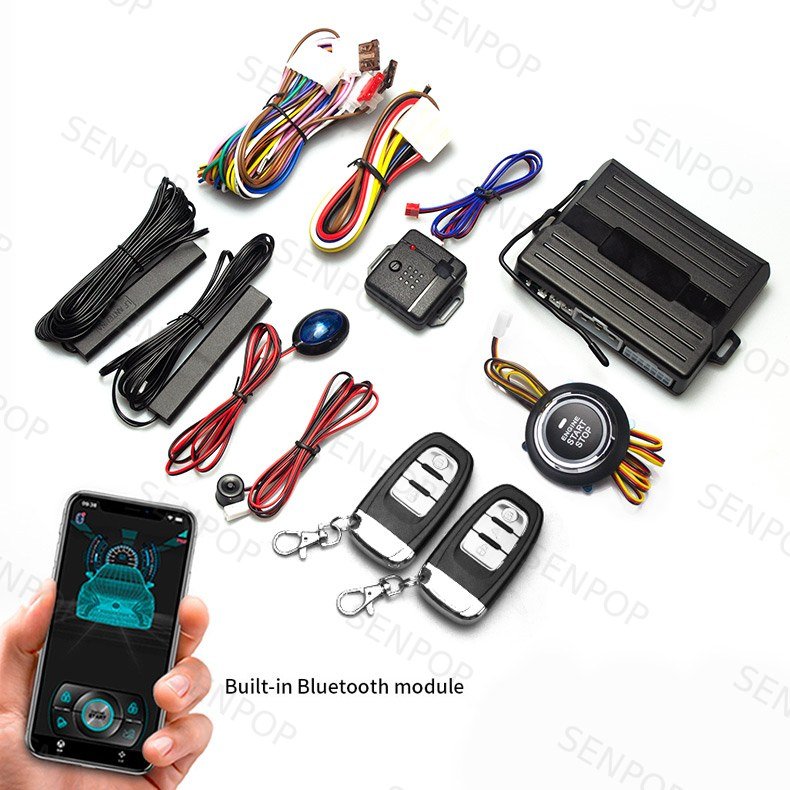
The SENPOP 8803BT, for example, pairs the traditional remote with BLE app control so the driver can use either to unlock the car. BLE models are a strong upsell for customers who already manage everything from their phone — and a clear differentiator against sellers who only carry basic RKE kits.
Anti-Relay Basics You Can Explain to Customers
Two security facts worth knowing when you sell PKE:
- Rolling-code encryption. The remote's reply changes every time, so a thief who records one signal cannot simply replay it later.
- Short-range detection is a feature, not a bug. Relay attacks require two active transceivers relaying the signal in real time between the car and a remote left near a home entrance. Keeping the detection zone tight — and advising end users not to store the remote right next to the front door — limits that exposure.
For fleet or premium customers, suggest storing remotes in a signal-blocking pouch overnight. Do not promise specific security certifications on your own product pages; if a customer needs documented test data, ask us and we will share what is available for the specific model.
What B2B Buyers Should Ask Before Stocking a Kit
- What is the detection range of each model, and what affects it after installation?
- How many remotes are included per kit?
- On BLE models: which app platforms are supported, and is the app updatable?
- Which central-locking types and vehicle-specific harnesses are supported?
- Does the kit ship with installation accessories (antenna, start button, wiring) in the box?
We answer these questions per model in our data sheets — request them through the quote form before you build your listing copy.
Frequently Asked Questions
How close does the driver need to be for the car to unlock?
The authorization zone is typically around the door handles, but the exact distance varies by model and antenna placement. Bluetooth models such as the 8803BT use BLE for an outer detection range; for measured figures of a specific kit, ask us for the data sheet before publishing them on your own product pages.
What happens if the remote battery runs low?
The LF wake-up needs a powered remote, so a weak battery first shortens the detection range and eventually stops auto unlock altogether. The manual buttons on the remote keep working. Advise customers to replace the remote battery at the first sign of reduced range.
Can PKE be added to a car that has no factory keyless entry?
Yes. Universal PKE kits connect to the vehicle's central locking system and add passive entry plus push button start regardless of what the factory fitted. Vehicle-specific harnesses are available for popular brands such as Toyota, Honda and Hyundai.
Is PKE the same as Bluetooth phone control?
No. Traditional PKE uses a dedicated remote with LF/RF communication. Bluetooth PKE models such as the 8803BT add a BLE link so the smartphone app can act as the key. Many BLE models keep the remote as a backup, so you can serve both use cases from one SKU.
Ready to source these products?
Browse our PKE keyless entry systems or request the technical data sheet for any model.
Request a Quote