
You have two quotations in front of you. The unit prices are close. You still do not know which one to accept — and you are right not to know. Two quotes are only comparable when six underlying layers match. Usually they do not, and the quotes never told you.
This article is written from the supplier's side of the desk. We issue quotations for a living, and we know which fields make two of them impossible to compare — not because anyone is hiding anything, but because the quotation format compresses a lot of assumptions into one number. This article unpacks the six layers, one per section, and ends with an alignment sheet you can copy into an email.
What this article will not do: no price examples, no discount rates, no cost percentages. Prices change; a number written today is wrong next month. What holds still is the structure — and the structure is what you can act on.
Why Two Quotes Can Look Identical and Mean Different Things
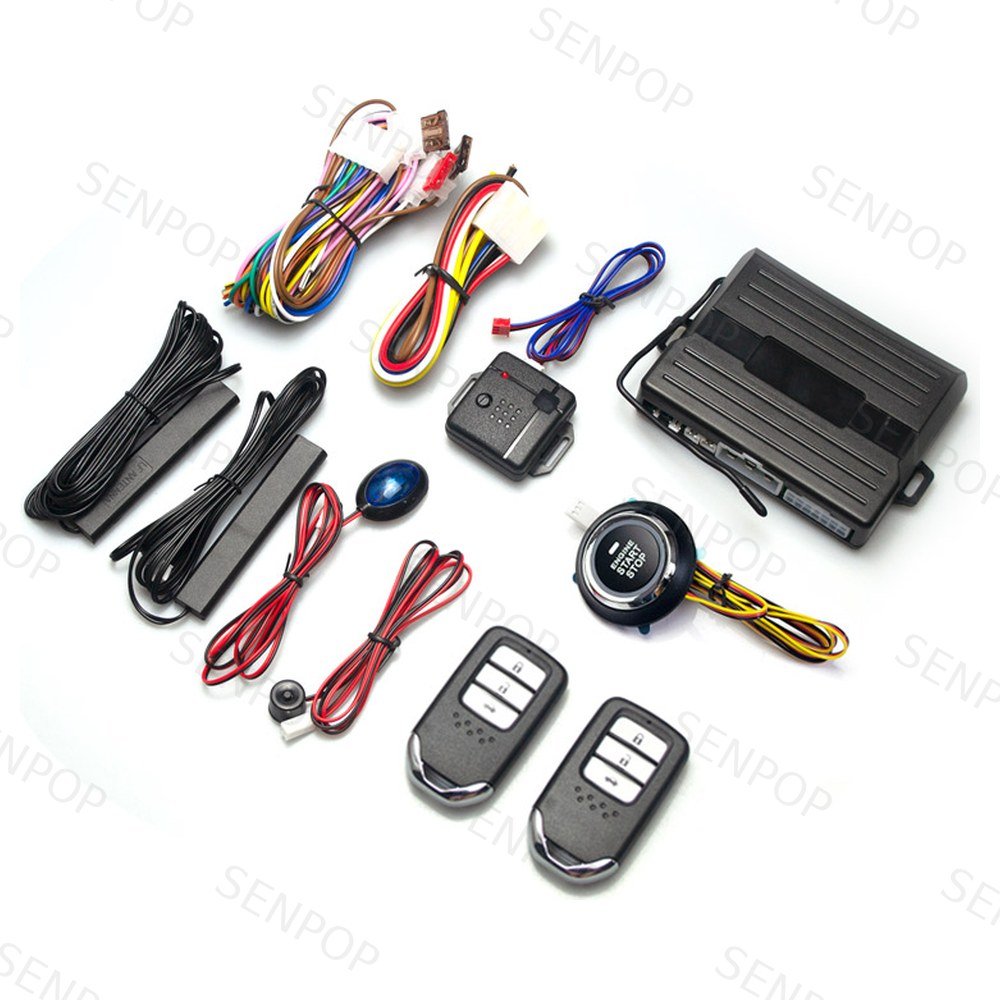
Take two quotes for the same model — say, an 8803-series PKE system. Call them Quote A and Quote B. Quote A is quoted ex-works, plain packaging, with the mould charge listed as a separate line and a short validity window. Quote B is quoted FOB, retail box included, with the mould charge absorbed into the unit price and a long validity window.
On paper, Quote B's unit price may come out lower. It is not a better price. It is a bundle. Quote B has packed the freight term, the packaging, the amortised tooling and the risk window into its single number, while Quote A left them visible. Comparing the two unit prices directly compares nothing.
Why suppliers do not volunteer these differences
Most of the time this is not concealment — it is habit. A supplier's regular buyers already know how their quotes work, so the assumptions never get written down. The new buyer is the only one who cannot see them. That is why the fix is not suspicion; it is asking the questions in this article of every supplier, including us.
Layers 1–2: Configuration and Price Term
Layer 1: which version does the unit price refer to?
Car security product lines are versioned. The 8803 alone ships in a universal version and vehicle-specific variants; the versions differ in remotes, harness, packaging — and therefore in cost. A quotation that says "8803, one line" without the version code is quoting an assumption, not a configuration.
Ask: which exact version code does this price cover? Which remote count and which harness? What happens to the price if the version changes? If two suppliers quote "the same model", check first that it is actually the same product.
Layer 2: FOB, EXW, CIF — who pays for what
The price term decides where the supplier's responsibility ends. Under EXW you collect the goods at their door and everything after is yours. Under FOB the supplier delivers them onto the vessel at the named port. Under CIF they also book the main carriage and insurance. The goods are identical; the number on the quote is not, because each term stuffs a different set of costs into it.
| Term | Inland transport | Main carriage & insurance | Where the price is "made" |
|---|---|---|---|
| EXW | Buyer | Buyer | At the factory gate |
| FOB | Supplier | Buyer | On board at the named port |
| CIF | Supplier | Supplier | At your destination port |
Ask: which term is this quote? And if I move it to FOB, how does the unit price change? Once two quotes are on the same term, they become comparable at the transport layer.
Layer 3: What Is Included and What Is Not
The five things most often left out
- Retail packaging and manual language — a plain brown box and an English manual cost less than a printed box with your language and logo.
- Silk-screen printing / your brand — on the unit, the remotes, or the box; each is a separate decision with a separate cost.
- Certification cost for your market — if your country requires a report or approval, who obtains it and who pays is a real question.
- Spare accessories — extra remotes, fuses, harnesses for after-sales.
- Inspection — whether the goods are checked before shipment, by whom, and whether a third-party inspection is welcomed.
Any one of these five can explain a meaningful gap between two "identical" quotes — and none of them appears as a line unless someone asks. Ask: does this price include the box, the manual language, the printing, the spares, and inspection? Send exactly that sentence; it is copy-ready.
How to force it into writing
Do not accept "yes we can do that" verbally. Reply to the quotation with a two-column list — included / not included — and ask them to confirm it back in writing. A supplier who confirms becomes a partner; a supplier who dodges has told you something too.
Layer 4: Validity — the Most Ignored Field
Why an old quote is not a quote
Three moving inputs sit under every car-electronics quotation: component prices, the exchange rate, and freight. When any of the three moves, the quote's foundation moves with it. A quotation without a validity date is not a commitment — it is a mood.
What a reasonable window looks like
There is no universal number, and we will not pretend there is one. The useful logic: a shorter validity window usually means the supplier is honest about how much they can control; a suspiciously long one means either the components are very stable or the risk of the quote not holding has been quietly shifted onto you. Ask when the quote expires, and ask what happens to confirmed orders if the market moves before shipment.
Why this layer matters most for wholesalers
You pass prices downstream. If your upstream quote expires before your downstream customer decides, you are wearing the risk in between — with your margin. Your downstream validity can never be longer than your upstream one; knowing the upstream window is therefore not paperwork, it is margin protection.
Layers 5–6: Tooling, Samples, Payment
Layer 5: tooling — one-time or amortised
Custom work (a logo mould, a bespoke box) carries a tooling charge. The same charge can appear as a separate line or be spread into the unit price across an assumed quantity — and the amortised version makes the unit price look very different while the total spend can be identical. Ask: is there tooling on my configuration? Whose asset is it once paid? Over how many units is it amortised? And what happens to the charge if the order is cancelled midway?
Sample fees: refundable or not
Sample policies differ legitimately — charged and non-refundable, charged and credited against the first order, or free with freight collected. None is a red flag by itself. What matters for your test-order budget is which one you are getting, stated before you pay, not after. See also our wholesale terms on the wholesale page for MOQ and mixed-order questions that usually come up right after the sample step.
Layer 6: payment terms and the cost of money
A deposit-plus-balance structure and full advance payment can carry the same unit price and cost you very differently: one ties up your capital for weeks and carries the supplier's performance risk; the other funds production directly and carries yours. Ask: what split do you work with, when is the balance due, and what documents trigger it? The "cheaper" payment term is the one whose risk you actually understand.
A One-Page Alignment Sheet
Copy this into an email to each supplier you are comparing. Six rows; if the answers differ, the unit prices are not comparable yet.
| Field | Quote A | Quote B | Aligned? |
|---|---|---|---|
| 1. Version / configuration | |||
| 2. Price term (EXW/FOB/CIF) | |||
| 3. Inclusions (box, manual language, printing, spares, inspection) | |||
| 4. Validity date | |||
| 5. Tooling (separate or amortised; over how many) | |||
| 6. Payment split and balance trigger |
The three-minute version: check rows 1, 3 and 5 first. Those three — configuration, inclusions, tooling — are the ones that most often differ silently, and if any of them differs, stop comparing prices and start comparing definitions.
When to Walk Away
Sourcing commentary elsewhere in this industry flags quotes far below the market band as a red flag — and that is a fair heuristic. But a lower price is not automatically a lie; sometimes the supplier genuinely structures cost differently. The flags we would treat as decisive are behavioural, not numeric:
- Refuses to state a validity date. The quote is not a quote.
- Refuses to put inclusions in writing. That is not "an unclear quotation" — that is a guarantee of a later dispute. We will say it plainly: if a supplier will not write down what the price includes, the disagreement has already been scheduled.
- Refuses to state the tooling arrangement. Custom tooling with undefined ownership is your money on their shelf.
Frequently Asked Questions
Should I always ask for FOB?
FOB is the usual comparison point because it puts every supplier at the same named port with inland costs included, which is exactly what comparability needs. It is not automatically the cheapest total cost — that depends on your freight arrangement — but for comparing quotes, it is the cleanest baseline. Ask for the same term on every quote before comparing any number.
Why do two suppliers quote very different tooling fees?
Different mould sources, different amortisation assumptions, or one of them folded the tooling into the unit price. Ask each supplier the same three things: separate or amortised, over how many units, and who owns the tool. The fee only makes sense once those three answers exist.
Is a lower sample fee a good sign?
Not reliably. Sample policy is a commercial choice, not a quality signal — a non-refundable fee and a credited fee can come from the same factory depending on the season. Read it as a term to be stated clearly in advance, not as a score.
Can I ask a supplier to match another supplier's quote?
You can, but a meaningful "match" needs the six layers of the other quote on the table — otherwise you are asking one supplier to hit a number built on different assumptions, and they can only say yes by quietly changing something. Send the full structure, not just the price, if you want a real answer.
What if they will not put the inclusions in writing?
Then the quotation is not ready to be accepted. There is no version of this that ends well: if the price does not say what it includes, the disagreement about what arrived is already scheduled. We put our inclusions in writing on request, and we expect the same from anyone we buy from.
Ask us for a quote with all six layers filled in
Tell us the model, the market and the configuration, and we will quote with version, term, inclusions, validity, tooling and payment written out — so you can put it on the alignment sheet above without a single follow-up question.
Request a comparable quotation →Related Reading
- PKE Car Alarm Wholesale: MOQ, Price & Lead Time — our MOQ, dispatch and mixed-order terms
- All Products — what each product line actually includes
- One-Way vs Two-Way Car Alarms — choosing the line before you ask for the quote