
They are not two versions of the same product. The 101 locks an engine; the 9002 changes how a car starts and then locks the engine. The fastest way to decide between them is not the feature list — it is what happens when each one fails.
Importers ask us this question in two forms. The first: "both are immobilizers, which line do I stock?" The second: "my customer wants push button start — is the 101 enough?" Both questions come from reading the two products on one axis. They sit on different axes, and this article separates them.
Two Products, Two Different Jobs
What the 101 anti-hijacking immobilizer does: it locks the engine, not the door
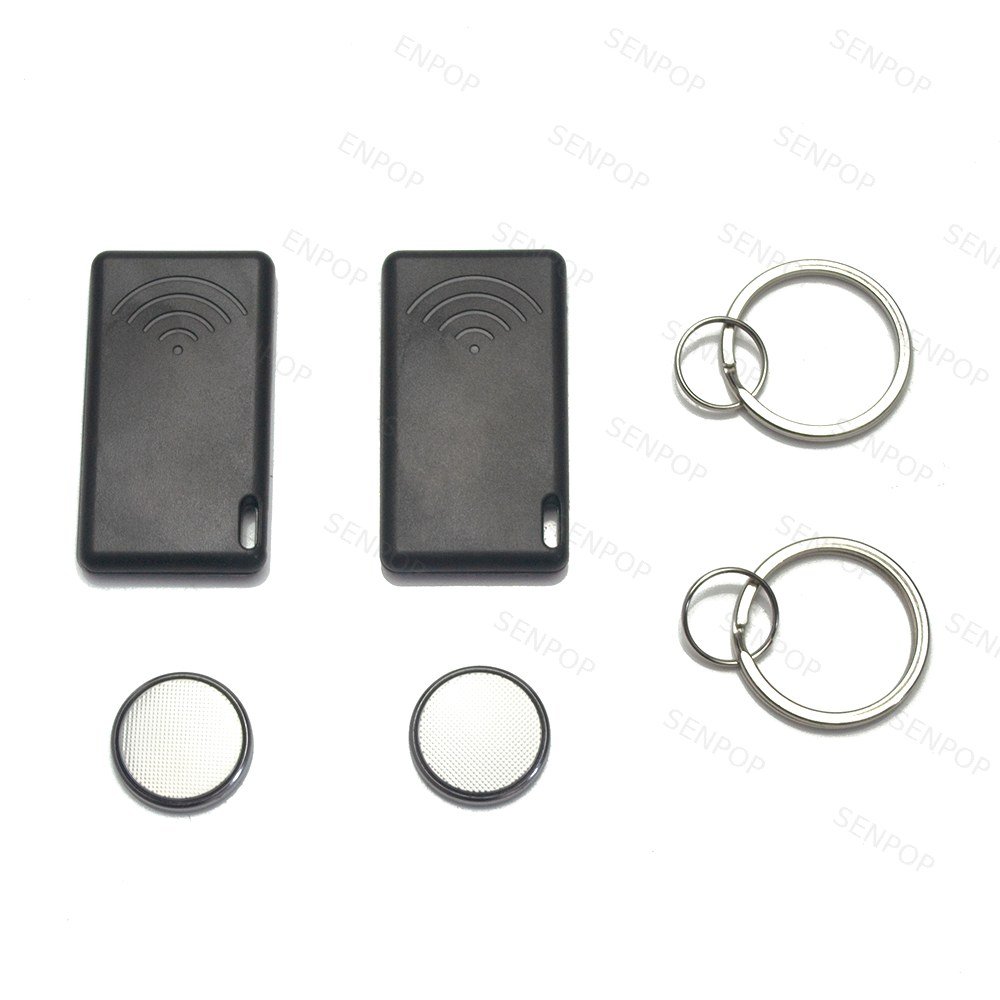
The 101 is a hidden-install engine immobilizer. The unit is concealed in the vehicle; the driver carries a sensing card. Per the supplier, it uses a 2.4 GHz sensing link with low interference, and the detection distance is adjustable between roughly 2 and 8 metres: the engine locks automatically when the card goes out of range and unlocks when it comes back. Two cards ship in each kit, the card has a low-battery alert, and the supplier rates it to fit any DC 12V vehicle — including vehicles that already have an alarm system.
The point that matters commercially: it does not touch how the car starts. The key, the ignition, the original starting behaviour — all of it stays as the manufacturer built it. The 101 adds a layer underneath.
What the 9002 RFID push button start does: it replaces how you start the car
The 9002 is a different category. It replaces the ignition key with a start/stop button, and authorises that start passively: the driver's registered RFID card must be present. The security layer is built in — 15 seconds after the engine is switched off, the system locks the engine automatically and the car cannot be restarted until a registered card is presented. Installation involves the vehicle's starting circuit, which is why the page states professional installation is recommended.
The difference that matters: failure mode
This is the frame we would use to choose, and it is the frame nobody on the first pages of search results offers:
- The 101 fails → the theft protection is gone, and the car drives normally. The owner may not even notice. The vehicle behaves exactly as it did before installation.
- The 9002 fails → the car does not start. Inconvenient, immediately visible, and the driver calls you — but nobody is driving the car away.
Read those two lines again, because they decide the support conversation before it happens. A product whose failure mode is "silent" needs a different customer-education approach than one whose failure mode is "stranded". Neither is worse; they are different commitments.
| Dimension | 101 hidden immobilizer | 9002 RFID push start | Who this favours |
|---|---|---|---|
| What it changes | Nothing visible — a hidden lock layer | The starting ritual itself | 101: owners who want the car untouched |
| Installation | Hidden unit + card sensing; no ignition work | Starting circuit + chip relocation where applicable | 101: faster fits, fewer callbacks |
| Authorisation | Card presence at 2–8 m (supplier-rated, adjustable) | Card read at ~12 cm — deliberate touch, not proximity | — |
| Failure mode | Protection silently gone; car still drives | Car will not start | Depends on the customer's tolerance |
| Effect on original functions | None — the supplier rates it for vehicles that already have an alarm | Replaces key start; keeps original remote for entry on relevant versions | 101: leased and shared vehicles |
| Anti-hijack | Yes — a selectable anti-robbery mode (see below) | Not a stated function | 101: higher-risk urban markets |
| Relationship to an alarm | Complements one — it locks the engine, the alarm makes noise | Start security, not a siren system | — |
| Best for | Security-led buyers, fleets, markets with hijack exposure | Convenience-led buyers who also want the lock | — |
The Two Protection Modes on the 101
Mode 1: anti-theft
In anti-theft operation the card does the work silently: card in range, engine available; card out of range, engine locks. There is nothing for the driver to remember, which is exactly why this product survives in fleets — no code to forget, no fob to leave at home. Per the supplier, if the driver leaves the vehicle with the card, the engine cuts about a minute later.
Mode 2: anti-robbery — and what it actually is
We are going to be precise here, because a lot of marketing copy is not. Anti-robbery does not mean the car cannot be taken. It means: if the driver is forced out of a running vehicle, the system engages a delayed engine cut after the vehicle has moved away — it shuts the engine down after the robbery, not during it. That delay is the entire design point: confronting a hijacker mid-abduction is how drivers get hurt; a engine that dies 500 metres down the road brings the car back without a confrontation.
So when you present this product to a customer, say it the way we just did. Selling it as "unstealable" sets a promise neither we nor you can keep, and it is the wrong promise anyway — the protection is in the timing.
For customers who want alarm-level response rather than an immobilizer, that is what a full system like the 606 universal car alarm adds — its anti-hijacking function sits on top of sirens, shock sensing and remote/APP control. Different layer again; the 101 and the 606 are not substitutes.
The emergency release is not optional
The 101 has an emergency release (service mode), and the product page lists it in the same breath as the two operating modes. That is not a footnote. A hidden immobilizer with no override path is a car that cannot be washed, serviced or jump-started by a workshop that does not know the system — and in an emergency, a vehicle that will not run. Any hidden immobilizer you stock must have a documented release procedure, and the installing shop must hand it to the owner. This is a screening question for any brand, not just ours.
The RFID Path on the 9002
The card is not a remote — and the distance is the tell
A large amount of content online blurs RFID cards and PKE remotes together. The distance line separates them: the 9002's card is read only within about 12 cm of the coil, while a PKE system recognises the key at several metres. Twelve centimetres is not a limitation — it is the security design. The card must be deliberately presented, which blocks over-the-air interception and scanner attacks that longer-range links are exposed to. We cover that threat model in the relay-attack article.
Why a card instead of a remote
Cards fit fleet hands better than fobs do. They slip into a wallet, they survive pockets, they cost little to reissue, and the 9002's card ID is written before sealing and cannot be changed — a unique, non-duplicable number. For a taxi base or a delivery fleet, "issue a card per driver" is a smaller administrative problem than "issue, track and recover remotes".
The 15-second engine lock
Fifteen seconds after the engine is switched off, the 9002 locks itself — the car cannot be restarted until a registered card touches the sensing coil, which confirms with a double beep. Operationally this means the re-arm is automatic: nobody has to remember anything, and a stolen-with-the-key scenario still ends at the coil. The owner-education point is the same one from our no-crank diagnostic article: a dead button on a cold morning may just be an armed unit, not a fault.
Which One to Stock
If you only sell security → the 101
It slots under any existing setup, it is invisible to the thief, and its failure mode never strands a customer. For a security-led importer in a market where vehicle theft is the headline concern, this is the line that fits the shelf.
If you only sell convenience → the 9002
The push start is what the customer walks in asking for; the immobilizer is what they get with it. For an installer whose customers want the button, the 9002 delivers the wanted feature and the protection in one unit.
If you sell both — the honest answer on combining them
Many importers carry both lines. Can a 101 and a 9002 live on the same car? Here is what we can and cannot say: the supplier rates the 101 for any DC 12V vehicle, including vehicles that already have an alarm system. What we do not have is a documented, tested installation of the two together — and we are not going to claim one. Two hidden RF systems on one vehicle is a question about interference and interlock logic that deserves a per-vehicle answer, not a brochure line. If you plan to offer the combination, tell us the vehicle and we will confirm what we can before you promise it to a customer. And the method in our no-crank article is the right first tool if a combined install ever misbehaves.
Do you even need a separate alarm?
If the stock question is "immobilizer or alarm", note that they answer different attacks: the alarm makes noise and draws attention; the immobilizer ends the trip. The 101 was designed to coexist with an alarm; the 606 already bundles sensing and siren. The combination logic for push start plus alarm is the subject of a separate article we are preparing, and we will link it here when it is live.
Frequently Asked Questions
Can the 101 and the 9002 be installed on the same car?
We do not have a tested, documented installation of the combination, so we will not claim it works. The 101 is rated for vehicles that already carry an alarm, which is a related but not identical question. Ask us with the specific vehicle and we will tell you what we can confirm.
Does the 101 need the original key?
No. The 101 does not touch the ignition or the key — it adds a hidden engine lock layer, which is why the supplier rates it for vehicles that already have an alarm system. The 9002, by contrast, replaces the key start with a button.
What happens if the sensing card battery dies?
On the 101, the card has a low-battery alert so the driver gets warned before the link drops, and the emergency release (service mode) is the fallback path. This is also why the release procedure must be handed over at installation. On the 9002, the cards are passive — there is no battery to die.
Can a thief just find the hidden unit?
Finding it and defeating it are different problems — a hidden engine lock is not a visible lock on a pedal that can be cut off in seconds. But no hidden immobilizer is unbreakable, and we will not pretend otherwise. The realistic value is time: a thief who needs minutes on an immobilizer picks an easier vehicle, and the anti-robbery mode covers the taken-anyway case with the delayed cut.
Want the selection table by market?
Tell us your market and customer mix, and we will suggest which line leads the catalogue — and what to confirm before promising a combined installation.
Contact SENPOP →Related Reading
- Why the Original Transponder Chip Must Stay in the Coil — the factory-immobilizer layer behind the 9002
- PKE vs RKE Keyless Entry — where proximity ends and deliberate authorisation begins
- Push Button Lit but Engine Won't Crank: 7 Checks — the diagnostic order if a combined install misbehaves
- All Car Security Alarms — the full line
Sources & attribution
Product statements in this article — the 101's 2.4 GHz link, 2–8 m adjustable detection, anti-theft/anti-robbery modes, emergency release and card low-battery alert; the 9002's 12 cm read range, unique sealed card ID and 15-second engine lock — are taken from the respective SENPOP product pages, which carry supplier specifications. The 2–8 m range is stated by the supplier and has not been independently measured by SENPOP. The failure-mode comparison, the anti-robbery delay explanation and the honesty notes on combined installation are SENPOP's own analysis, offered as reasoning rather than test results.