
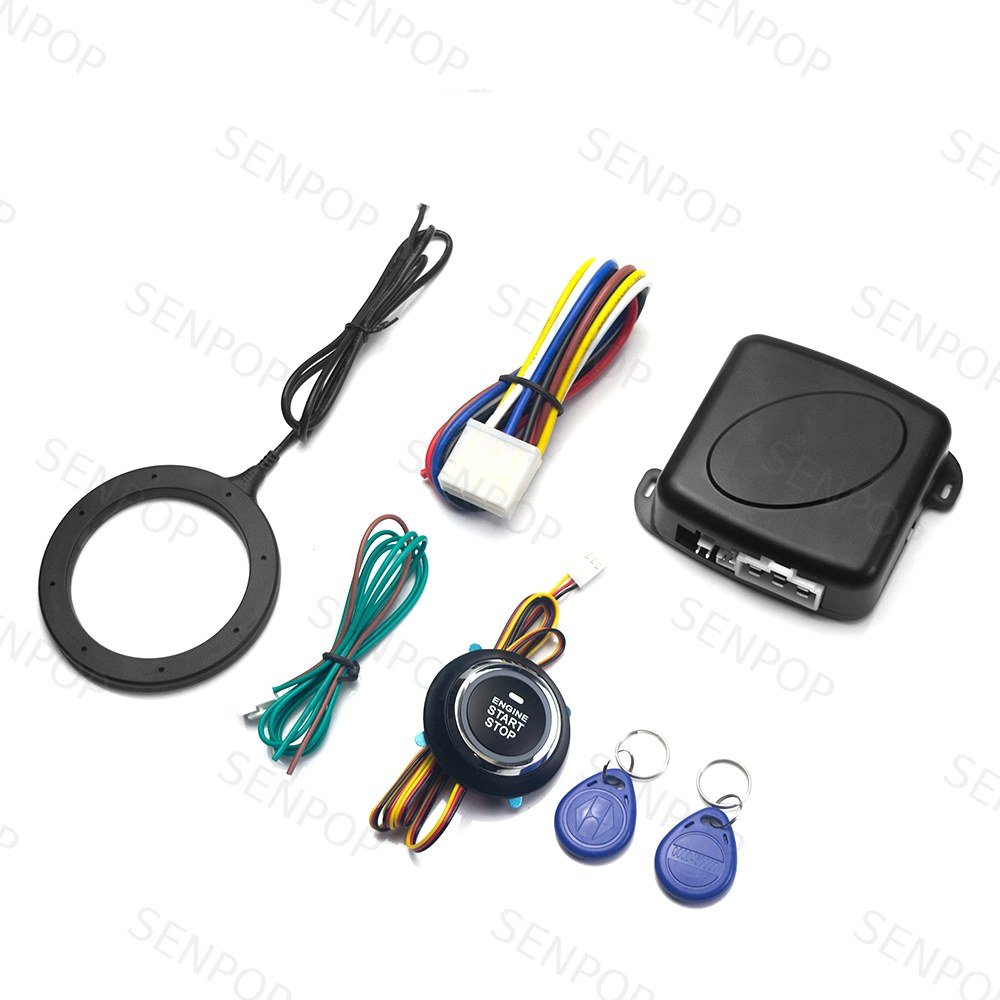
Can you sell remote start to a manual-transmission customer? Yes — but not with the same wiring as an automatic, and not without a safety input that most cheap kits do not have. The part that catches importers is that the answer is not "yes" or "no"; it is "yes, with these parts, wired this way".
This question arrives at every distributor eventually, usually in one sentence: "my market is mostly manual — can I supply remote start?" The safe answer costs you a sale if you get it wrong in one direction, and a liability claim if you get it wrong in the other. This article gives you the technical facts, the parts involved, and a script for the conversation.
Why Manual Is Different
On an automatic, "in gear" is not really a state the car can be parked in — park is park, and the transmission holds it. On a manual, "in gear" is a decision the last driver made, and the car does not know about it. A remote start is, by definition, an engine start with nobody inside to check.
That is the whole problem in one sentence: an automatic tells you it is safe to start; a manual has to be asked. Everything below is about how the system asks.
One more difference that matters commercially: on a manual, the driver starts the engine with the clutch pedal, not the brake. Our kits handle that at the button (our PKE explainer notes that the driver presses the brake or clutch), but remote start has no pedal at all — which is exactly why it needs its own safety input.
The Two Safety Inputs You Must Have
Input 1: the handbrake detection wire — the one that enables remote start at all
This is not an optional accessory; it is the wire that turns remote start on. From our 9002 installation guide, stated plainly: "This wire enables the remote start function; without it there is no remote start." For a manual-transmission vehicle, that guide requires both — the wire connected and the handbrake engaged before remote starting.
The polarity detail matters at install time: the input leaves the factory set to negative trigger, so the vehicle's handbrake signal must go to ground when the handbrake is engaged. If the vehicle's signal is positive, a relay must be added to convert it — and on a few models the handbrake signal is +12V triggered, in which case a diode goes in series (anode to the vehicle's handbrake wire, cathode toward the kit). This is a per-vehicle check, not a universal recipe.
Input 2: the gear state — the one a wire cannot always give you
Here is where the honest answer gets uncomfortable. Many manual vehicles have no neutral-position switch to read — unlike the automatics that report "P" over the data bus. Our own 8803 manual handles this the way most of the category does: instruction 5.5 simply says "Keep the gear in neutral before a remote start." That is a procedure, not a circuit — it depends on the driver having done it.
The 9002 guide is equally direct about the fallback case: if the handbrake signal cannot be located, or the vehicle has none, the detection wire may be grounded directly — provided the vehicle is never left in gear when parked with the engine off. Read that condition twice. It converts a hardware safety into a driver habit, and a driver habit is not a safety device.
Where a real neutral or clutch interlock is required — a fleet policy, a market with strict liability, or simply a shop that does not want the risk — the answer is an interface that reads the vehicle's own clutch or neutral switch. We will not name a universal part number for that, because the correct arrangement belongs to the vehicle's wiring documentation. Tell us the vehicle and we will tell you what we can confirm; anything beyond that is engineered per vehicle, not bolted on from a catalogue.
What Happens If You Skip Them
The failure is not a dead battery or a warning light. It is this sequence:
- The driver parks in gear — normal habit on a hill, or simply left in first.
- The car is remote-started, or auto-starts on approach with a PKE kit.
- The starter motor turns the engine and the drivetrain, and the vehicle lurches forward on the starter alone.
On a flat driveway that is a jolt and a stalled engine. On a slope, in front of a shop window, or with a child in front of the car, it is not. The starter motor has enough torque to move a vehicle several metres — that is the entire reason every manufacturer's manual in this category prints a "keep it in neutral" line.
And the liability sits with the installation, not the part. We supply components: the module, the harness, the documented requirements. Whether a given vehicle has its handbrake input connected, correctly polarised, and engaged at the moment of a remote start is a decision made by whoever did the install and whoever drives the car. We are explicit about this because it is the truth, and because importers get sued in exactly this shape if the boundary is left fuzzy.
How to Say It to a Customer
You will be asked this at the counter, and the wrong answer is either extreme. Here is a script you can use as-is:
“Remote start works on a manual, but it is not a plug-and-play fit like it is on an automatic. Two things have to be right: the handbrake detection wire has to be connected — that is what enables remote start at all — and the car has to be left in neutral with the handbrake up when you use it. If your vehicle has no handbrake signal we can ground the wire, but then leaving it in gear becomes your responsibility.
If you want it safer than that, we fit an interface that reads the clutch or neutral switch, and the car itself refuses to remote-start in gear. That costs more and takes longer. Tell me which one you want.”
Three things that script does deliberately: it never says "our system detects neutral" (it does not), it never says "manual is impossible" (it is not), and it moves the decision to the customer with the cost of each option visible. That last part is what keeps the conversation commercial instead of adversarial.
Which of Our Models Support It
- 9002 (RFID push start): documents the handbrake detection wire and its manual-transmission requirement explicitly — the clearest paper trail in our line for this question. Note that its remote start uses the vehicle's original remote, not a supplied fob.
- 8803 platform: the manual covers remote start (lock button held 5+ seconds in armed mode) and prints the neutral instruction at 5.5. It does not claim neutral detection.
- 8808RKE / RKE kits: remote start is a core function; confirm the handbrake input arrangement for the specific version before promising manual fitment.
- General rule: if a model's documentation does not name a handbrake or neutral input, treat remote start on a manual as unsupported for that model until we confirm otherwise. That is the conservative reading, and it is the one we would want our own distributors to take.
Our kit-selection guide covers this earlier in the decision — transmission type comes before remote start, not after. Read that first if you are still choosing a line.
Frequently Asked Questions
Can I sell remote start to a manual-transmission market?
Yes, with the handbrake safety input wired correctly and the neutral procedure transferred to the driver — or with a per-vehicle interface reading the clutch/neutral switch if the market needs a hardware interlock. What you cannot do is sell it on the automatic-transmission wiring and hope.
Does the system detect if the car is in gear?
No, and we will not claim it does. Our documentation gives a neutral instruction and a handbrake input. Those are different things: one is a habit, one is a circuit. If you need the car itself to refuse, that is the interface route described above.
What if the vehicle has no handbrake signal to tap?
Our 9002 guide allows grounding the detection wire directly in that case — on the condition that the vehicle is never left in gear when parked with the engine off. It is a documented fallback, not a free pass: the safety moves from the circuit to the driver.
Who is responsible if a remote-started manual car moves?
The installation and the driver, not the component supplier. We supply parts with documented requirements; whether the handbrake input is connected, correctly polarised and engaged at the moment of a remote start is determined at the install and at the driver's seat. We state this plainly so nobody discovers it after an incident.
Does push button start itself need these inputs on a manual?
No — push button start is done with a person in the seat pressing the clutch or brake, so the interlock is the driver's foot. The safety inputs in this article are specifically about remote start, where no foot is present.
Selling into a mostly-manual market?
Tell us the vehicle mix and whether your market needs a hardware interlock, and we will confirm which models' documentation covers the handbrake input — and what has to be engineered per vehicle.
Ask about manual-transmission fitment →Related Reading
- How to Choose a Push Button Start Kit — transmission type before remote start
- 9002 Push Button Start Installation Guide — the full handbrake detection wire section
- Push Button Lit but Engine Won't Crank: 7 Checks — when a "won't start" complaint is actually a missing input
- All PKE Keyless Entry Systems — the full line