
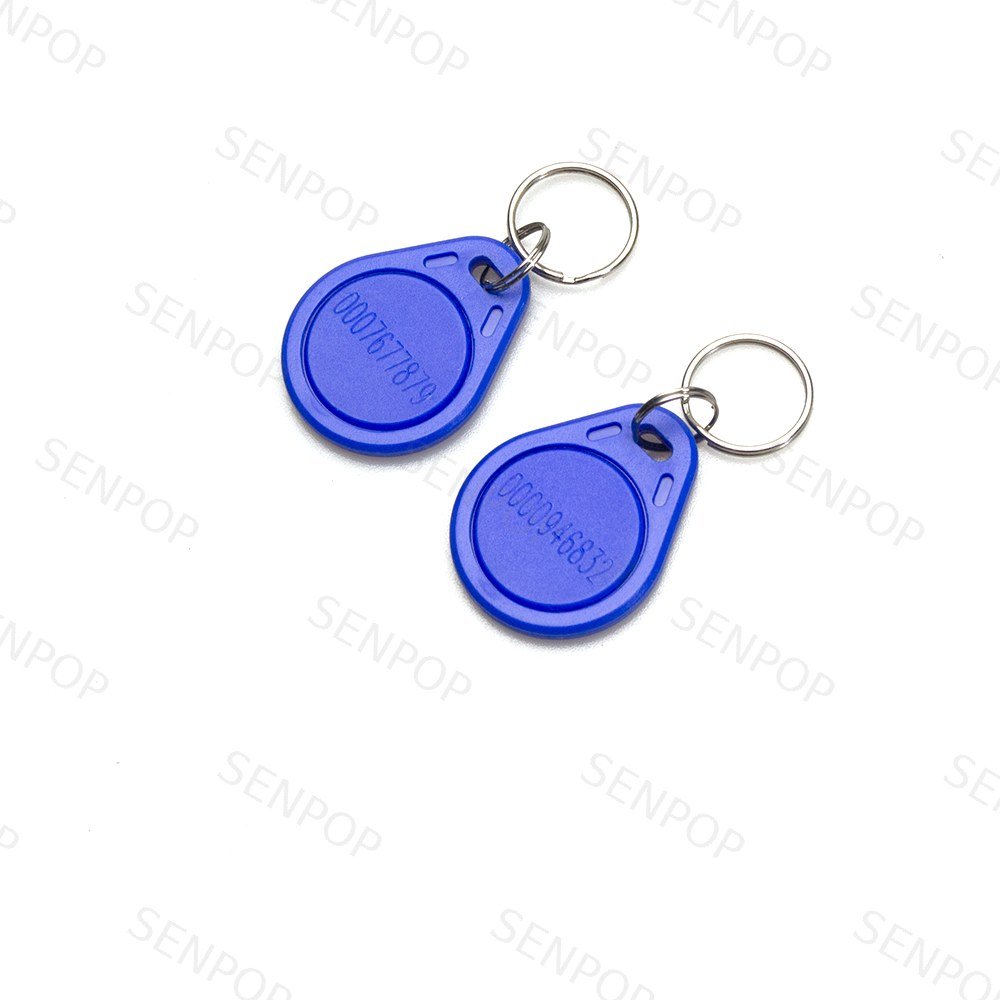
The question is not which key format is most advanced. It is which one your market can actually support. A Bluetooth key lives or dies with phone penetration, data cost and your ability to run app support; a card key lives or dies with user habit; a remote key lives or dies with nothing but a battery. Three different support contracts.
We supply all three formats — the RFID card platform (9002), several Bluetooth lines (8803BT, 8808BLE, S-807R, S9907R), and plain-remote RKE kits (8808RKE) — and the questions importers ask reveal the same confusion every time: they compare feature lists when they should be comparing failure modes and support costs. This article does the latter.
Three Ways to Carry a Key
The RFID card — deliberate authorisation
On the 9002 platform, the key is a passive card: no battery, a write-protected ID written before sealing, and a read range of about 12 cm from a hidden coil. The driver touches the card to the coil; the system confirms with a double beep; the engine starts on the button. Security comes precisely from the short range — the card cannot be intercepted or scanned over the air, because there is nothing airborne to intercept. We covered this platform's positioning against a hidden immobilizer in Hidden Immobilizer vs RFID Push Start.
The Bluetooth phone — the key you already carry
The Bluetooth lines make the smartphone the key. The 8808BLE unlocks as the paired phone approaches at 3–5 metres and locks again as the driver walks away; the S-807R and S9907R add app control (the "AI CAR KEY" app on Android and iPhone) for lock, unlock and engine start. The 8803BT takes a middle path: full app control plus the conventional remotes in the same kit, so the phone is an upgrade rather than a single point of failure.
The plain remote — the fallback that never became obsolete
The 8808RKE is the benchmark RKE push start: remote lock/unlock, remote engine start, push button inside — and, notably, a Bluetooth module available in two of its three kit configurations. Even our own line hedges: the remote remains the format every driver understands and every installer can service.
How Each One Fails
This is the table to read before the feature table, because it is the one your after-sales inbox actually fills up from:
| Format | Fails when… | Failure looks like | First fix |
|---|---|---|---|
| RFID card (9002) | Almost never by itself — no battery, no radio link to exhaust. The coil or wiring has to fail | Button dead on a cold morning — which may just be the armed state (touch the card, listen for the double beep) | Present the card; then the 7-check diagnostic order |
| Bluetooth phone | Phone replaced or OS updated, app permissions changed, Bluetooth background-killed, driver's phone battery flat | "It worked on my old phone" / intermittent entry — a software-adjacent fault that arrives in waves after OS updates | Re-pair, re-grant permissions, fall back on the physical remote |
| Plain remote | CR-series battery drains; fob physically lost or washed | Range shrinking over months, then nothing | Battery swap; re-learn a new fob via the learning button (documented on the 8803 platform and the 8808BLE) |
Read the middle row again. Bluetooth failures are not hardware failures — they are software ecosystem failures, and they scale with the number of phones your customers own, not with the number of units you sold. That single difference drives everything in the rest of this article.
Market Infrastructure Decides
The same kit succeeds in one market and quietly rots in another, because the infrastructure under each key format is different:
| Market condition | Favours | Why |
|---|---|---|
| High phone penetration, cheap data, young buyers | Bluetooth lines | The phone-as-key experience is the selling point, and users tolerate app setup |
| Fleet and taxi operations (multiple drivers per vehicle) | RFID cards | Issue a card per driver; no fobs to manage, no phones to pair, no app to train |
| Price-sensitive retail, thin after-sales capacity | Plain remote | The only failure mode is a battery — fixable at any kiosk without you |
| Markets where drivers refuse to change habits | Remote or card | A key format that requires an app requires behaviour change; cards require a touch, remotes require nothing new |
| Importer with no software support staff | Card or remote | App questions come back to you in the customer's language — be honest about whether you can answer them |
This is a statement about market conditions, not about our customer list — the same honesty we applied to the trends data in the 24V article. Choose by the infrastructure you can see, not by the feature list that reads best.
Support Cost Comparison
- Card platforms: near-zero recurring support. The consumable is nothing (no battery), the failure is wiring-level, and reissuing cards is a factory task rather than a field one — the 9002's card IDs are write-protected and cannot be duplicated in the field, so additional or replacement cards are arranged through us with the unit's details.
- Remote platforms: one consumable (the battery) and one trainable skill (code learning). Both are documented, field-repairable, and teachable over a phone call. This is why remotes remain the default in markets where the importer answers support calls alone.
- Bluetooth platforms: the support surface is everything the phone does. App availability per platform and version, pairing behaviour across OS updates, permission prompts — these change on Apple's and Google's schedules, not yours. The kit-side remedy is the same hedge we build into the 8803BT: always ship a physical fallback, so an app problem is an inconvenience rather than a stranded customer. One honesty note: our product pages name the app where it is fixed (the AI CAR KEY app on the S-807R and S9907R); for the other models, app details and OS requirements vary by version — ask us for the current detail for the exact model before you publish it in your own listing.
Recommendation by Buyer Type
Importer building a retail brand in a smartphone-first market
Lead Bluetooth (8808BLE or S-807R), and only with remotes in the box. Your marketing sells the phone; your returns desk lives on the fallback. Publish the app requirements in your listing before the customer asks.
Distributor serving fleets, taxis and logistics
Lead the 9002 card platform. Cards per driver, no batteries, no pairing, no app — and the hidden immobilizer comes with it. The failure mode ("the car won't start") is visible and diagnosable, never silent.
Wholesaler covering mixed markets with thin support
Lead the 8808RKE-class remote kits, add the 8803BT as the "smart" option in the catalogue. Both keep a physical key in every sale, and the 8803BT lets the market discover Bluetooth at its own pace.
Whoever you are: one question decides it
Who answers the support call, and in what language? If the answer is "the installer, locally, in the local language", all three formats work. If it is "nobody yet", start with card and remote, and add Bluetooth when the support path exists. We will say this plainly rather than sell you the format with the longest feature list.
Frequently Asked Questions
Can the 9002's RFID card be copied or duplicated?
No. The card ID is written before sealing and is write-protected — that is the platform's core security property. Replacement or additional cards are supplied through us with the unit's details, not duplicated in the field.
Which app do the Bluetooth models use, and does it need internet?
The S-807R and S9907R use the "AI CAR KEY" app on Android and iPhone. For the other Bluetooth models, app details vary by version — ask us for the current app and OS requirements for the exact model before listing it. We are not going to claim "works offline" or "needs internet" generically; the answer differs by model and we prefer to be right.
Is Bluetooth keyless entry secure?
It is a radio protocol with rolling authorisation, like the other formats in our line. What we will not do is market it with words like "military-grade" or "unbreakable" — no radio key format deserves those words. The honest framing: every format trades convenience against a threat surface, and the countermeasures (short card range, physical fallbacks, PKE sensing switches) are engineering choices you can read about on each product page.
Can I stock all three formats?
Most of our distributors do — the formats serve different customers rather than competing for one. The practical sequencing that works: remote kits as the volume base, cards for the fleet channel, Bluetooth as the premium line once app support exists. MOQ is 5–10 pcs per model and mixed models can combine in one order, so a three-format test stock is a realistic first step — see the wholesale page.
Which format has the lowest return rate?
We do not publish return-rate figures, and we are not going to invent a ranking. What we can say structurally: card and remote failures are field-fixable (touch the card; change the battery), while Bluetooth failures often need re-pairing support. Whatever your return-rate experience becomes, that structural difference is where it will show up.
Tell us the market — we will suggest the key-format mix
Market, channel and support capacity — three words from you, and we will recommend which formats to lead, in what order, and what to confirm before you list.
Ask for a format recommendation →Related Reading
- PKE vs RKE Keyless Entry — where Bluetooth fits in the distance-zone picture
- Hidden Immobilizer vs RFID Push Start — the 9002's positioning in the security line
- Push Button Lit but Engine Won't Crank: 7 Checks — the diagnostic order behind the card row in the failure table
- PKE Car Alarm Wholesale — MOQ, mixed orders and dispatch terms for a multi-format first stock